Early Life : Paulo Coelho
Writer Paulo Coelho was born on August 24, 1947, in Rio de Janeiro, Brazil. A son of an engineer and a housewife. He attended Jesuit school and was raised by devout Catholic parents. He determined early on that he wanted to be a writer but was discouraged by his parents, who saw no future in that profession in Brazil. According to Coelho, his parents responded to his artistic aspirations and to his introverted personality by committing him to a mental institution and approving electro-convulsive ("shock") therapy for their son.
"I have forgiven," Coelho said. "It happens with love, all the time - when you have this love towards someone else, but you want this person to change, to be like you. And then love can be very destructive." - source Biography.com
Paulo Coelho eventually got out of institutional care and enrolled in law school, but dropped out to indulge in the "sex, drugs and rock 'n' roll" of hippie life in the 1970s. He became involved with a theater group as an actor and director and worked as a journalist, founding a magazine called 2001. He wrote song lyrics for Brazilian musicians protesting the country's military rule and collaborated on a political comic strip. Because of his progressive activities, Coelho was kidnapped and tortured by a Brazilian paramilitary group in 1974. He was jailed three times for his political activism and subjected to torture in prison. Afterwards, retreating into conventionality, he worked as a music-industry executive.
Pilgrimage
His life's major turning point occurred when Paulo Coelho met a stranger in an Amsterdam café who told him to make the traditional Roman Catholic pilgrimage to Santiago de Compostela in Northern Spain. Coelho did so in 1986. Coelho walked more than 500 miles along the Road to Santiago de Compostela. The walk and the spiritual awakening he experienced en route inspired him to write The Pilgrimage, an autobiographical account of the trek, in his native Portuguese. He quit his other jobs and devoted himself full-time to the craft of writing.
Career Highlights
Inspired by his journey to Santiago de Compostela, Paulo Coelho wrote The Pilgrimage: Diary of Magus, about extraordinary events that happen to ordinary people. Published in 1987, the book's commercial and cultural impact was at first negligible.
The following year The Alchemist was published. The novel sold only nine hundred copies initially and was not reprinted. Coelho's next book, Brida, was well-received, however, and as a result, both The Pilgrimage and The Alchemist became best-sellers. Indeed, The Alchemist became the best-selling Brazilian book ever and then an international best-seller — one of the best-selling books in history, ultimately.
Paulo Coelho has written and published more than twenty-five books in all, including collections of essays and newspaper columns, though most are novels. Some of his best-known books are By the River Piedra I Sat Down and Wept, The Fifth Mountain, Veronika Decides to Die, The Devil and Miss Prym, Warrior of the Light: A Manual, The Zahir, and Eleven Minutes.
'The Alchemist'
In 1987, Paulo Coelho wrote a new book, The Alchemist, over the course of one two-week spurt of creativity. The allegorical novel was about an Andalusian shepherd boy who follows a mystical trek in which he learns to speak the "Language of the World" and thus receives his heart's desire. The book attracted little attention at first, until a French-language translation suddenly leapt onto bestseller lists in France in the early 1990s. New translations followed, and soon The Alchemist became a worldwide phenomenon. The book has sold, by Coelho's count, roughly 35 million copies, and is now the most translated book in the world by any living author.
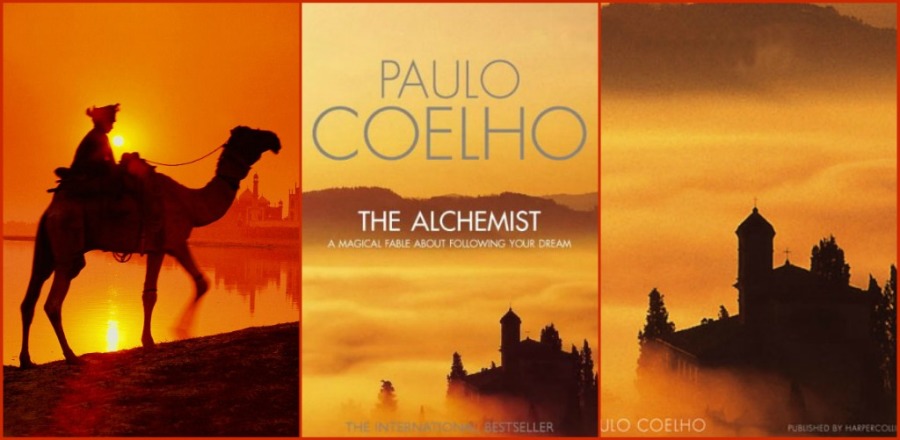
Since the publication of The Alchemist, Coelho has produced a new book at a rate of about one every two years. In a somewhat unusual scheduling ritual, he allows himself to begin the writing process for a new book only after he has found a white feather in the January of an odd year. As odd as that may sound, it seems to be working. His 26 books have sold more than 65 million copies in at least 59 languages.
Personal Life
Coelho's fans call his books inspiring and life-changing. His critics dismiss his writing as New Age drivel, promoting a vague spirituality devoid of rigor. A confident writer who rejects the self-help label—"I am not a self-help writer; I am a self-problem writer"—Coelho dismisses his naysayers' critiques. "When I write a book I write a book for myself; the reaction is up to the reader," he says. "It's not my business whether people like or dislike it."
Coelho and Christina Oiticica, the artist, are married since 1980. Together the couple spends half the year in Rio de Janeiro and the other half in a country house in the Pyrenees Mountains of France. In 1996, Coelho founded the Paulo Coelho Institute, which provides support to children and the elderly. He continues to write, following his own version of The Alchemist's "Language of the World."
Famous books by Paulo Coelho:
| Year | Portuguese Title | English Title |
| 1987 | O Diário de um Mago | The Pilgrimage |
| 1988 | O Alquimista | The Alchemist |
| 1990 | Brida | Brida |
| 1992 | As Valkírias | The Valkyries |
| 1994 | Na margem do rio Piedra eu sentei e chorei | By the River Piedra I Sat Down and Wept |
| 1996 | O Monte Cinco | The Fifth Mountain |
| 1997 | Letras do amor de um profeta | Love Letters from a Prophet |
| 1998 | Veronika decide morrer | Veronika Decides to Die |
| 2000 | O Demônio e a Srta. Prym | The Devil and Miss Prym |
| 2003 | Onze Minutos | Eleven Minutes |
| 2004 | Vida | Life |
| 2005 | O Zahir | The Zahir |
| 2006 | Ser Como o Rio que Flui | Like the Flowing River |
| 2006 | A Bruxa de Portobello | The Witch of Portobello |
| 2008 | O vencedor está só | The Winner Stands Alone |
| 2010 | Aleph | Aleph |
| 2012 | Manuscrito Encontrado em Accra | Manuscript Found in Accra |
| 2014 | Adultério | Adultery |
| 2016 | A Espiã | The Spy |
Read about other authors here.
Really good job mitul. This article is really helpful
ReplyDelete